










A few weeks ago, I invited my mom to join me in my kitchen for a day of pie making. She’s made hundreds of pies over the years and is known for her tender, flaky crusts. Working beside her brought back memories of making pie with her as a child. I love to watch her hands at work, her touch on the dough is so light and sure. We had a lovely day together and delicious pies to show for our work.
As we worked, my mom and I talked about pie. I told her I know many great cooks who are daunted by pie crust. Her answer was simple: if you want to be good at making pie, practice.
There are lots of tips you can use to improve your crust—how much to cut the fat, how wet the dough should be, and how to roll out and handle your dough. But in the end, there is no substitute for doing.
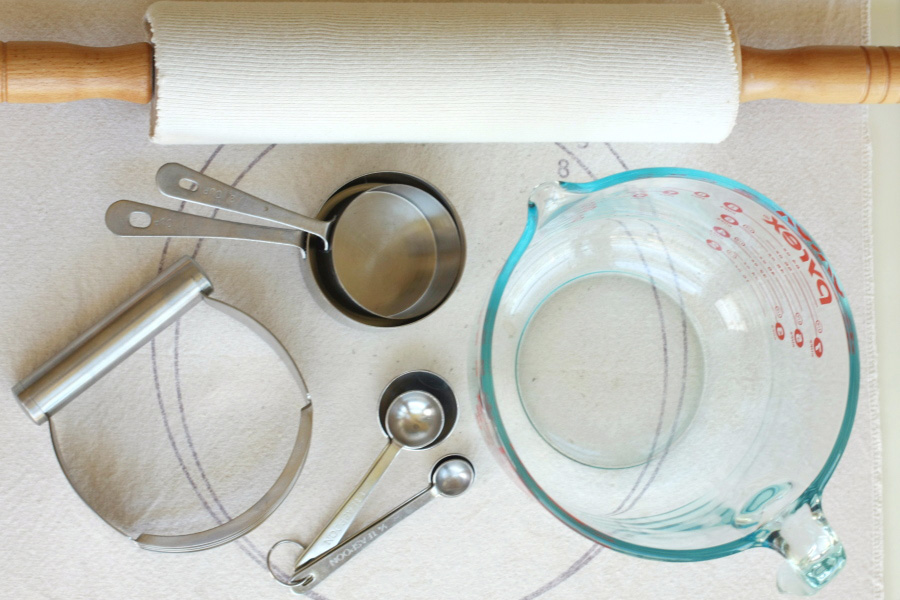
You don’t need fancy tools to make a good pie crust. The essentials are a mixing bowl, measuring cups and spoons, a pastry cutter, a rolling pin and a pie plate.
I use one more tool that’s not a necessity but is my favorite pie secret, and that’s a pastry frame. A pastry frame is canvas stretched tight over a wood and metal frame. It can be used for pies, pastries and even rolls. They are inexpensive (I paid about $15 for mine) and they roll up compactly to store. They make it incredibly easy to roll out your dough without sticking, and thanks to the canvas, your dough absorbs less flour, making your crust lighter and more tender. My frame even has guides so you know exactly how large to roll your dough.
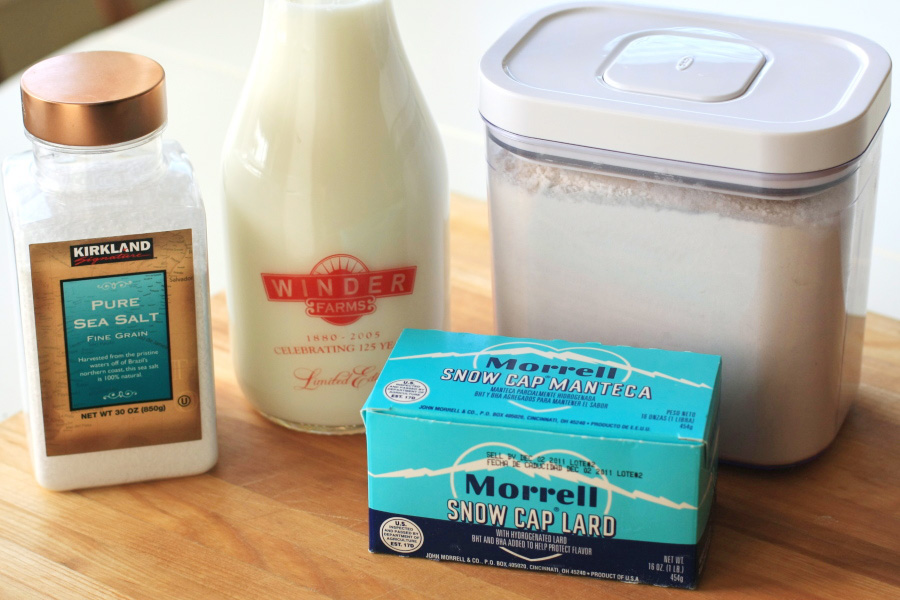
The ingredients for pie are simple too, no matter which recipe you use. Each recipe has dry ingredients, usually all-purpose flour, salt, sometimes sugar, a liquid (ice water, milk or even vodka), and a fat.
There is great debate in the pie world about which fat is best: butter, shortening, lard, or a combination of those fats. The two best pie makers I’ve known, my mom and my husband’s late grandmother, both use(d) lard. Their crusts speak for themselves—flaky, delicious, out of this world. So lard is what I use, too. Whatever fat you choose, it must be cold, cold, cold. Cold fat makes for flaky crust.
So let’s get baking.
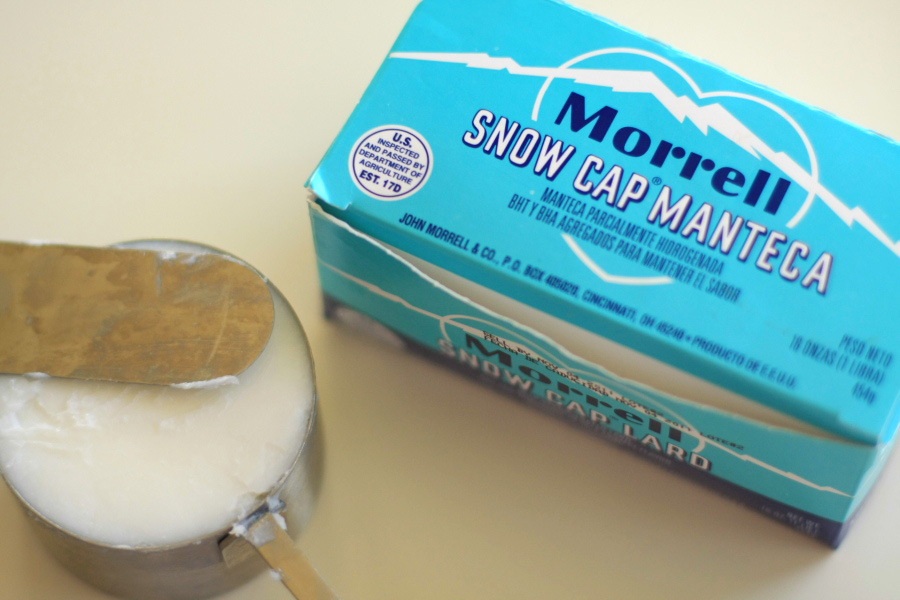
Before anything else, measure the lard and put it in the freezer to get it extra cold. Then prepare the rest of the ingredients.
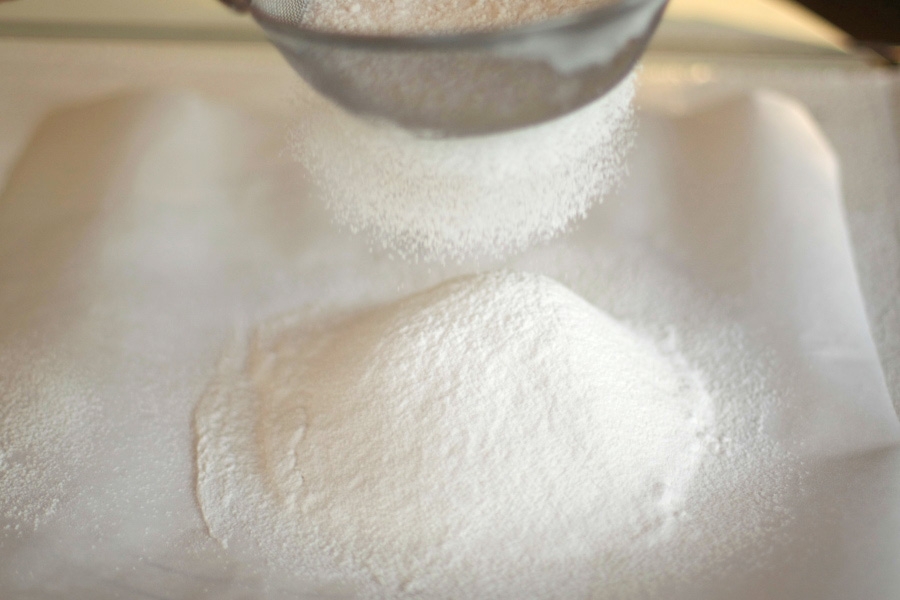
Measure 2 cups of flour and sift onto a piece of parchment or wax paper.
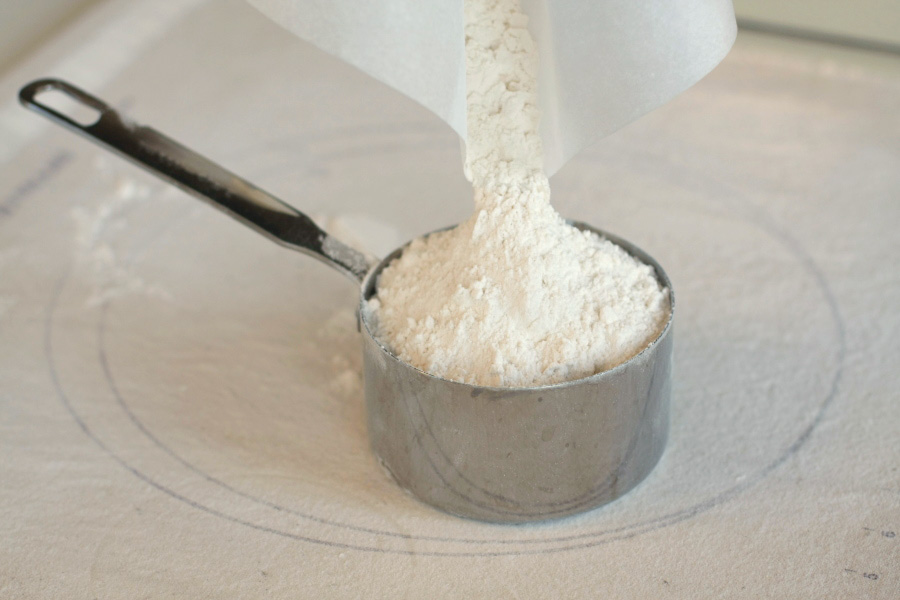
Re-measure the 2 cups of sifted flour. My mom lifts the parchment like a funnel and pours it back into the measuring cup. She also re-measures over the surface where she will be rolling out the dough. The overspill helps to flour the surface. My mom is all about economy of action.
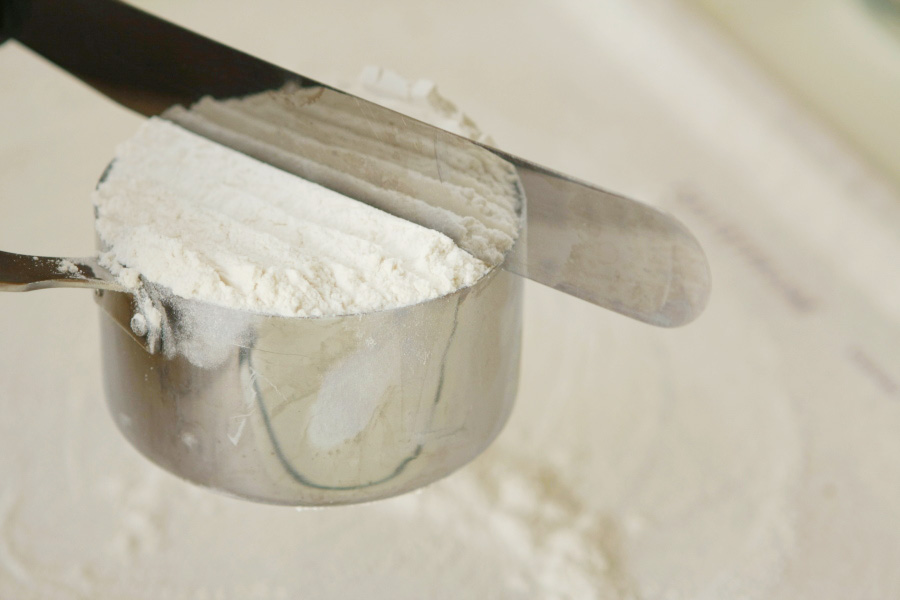
Tap across and level with a knife.
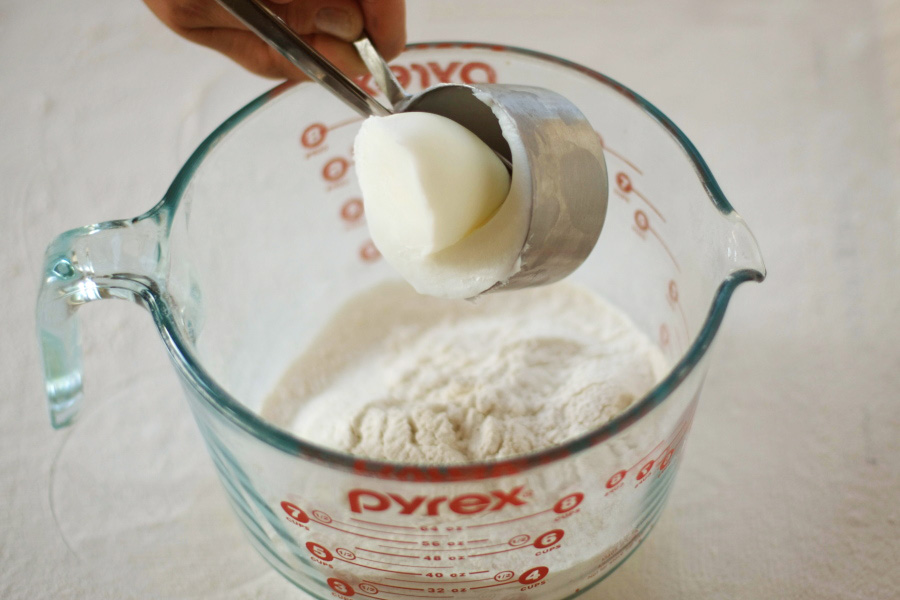
Add the salt to the flour and sift again, this time into your mixing bowl. Then add the cold lard. Using a pastry cutter, cut the lard into the flour. Some pie makers turn this step over to their food processor. Resist the temptation! It’s too easy to overwork the flour and end up with a tough crust. The pastry cutter, on the other hand, will give you a nice workout. I like to think I’m burning off a few bites of pie.
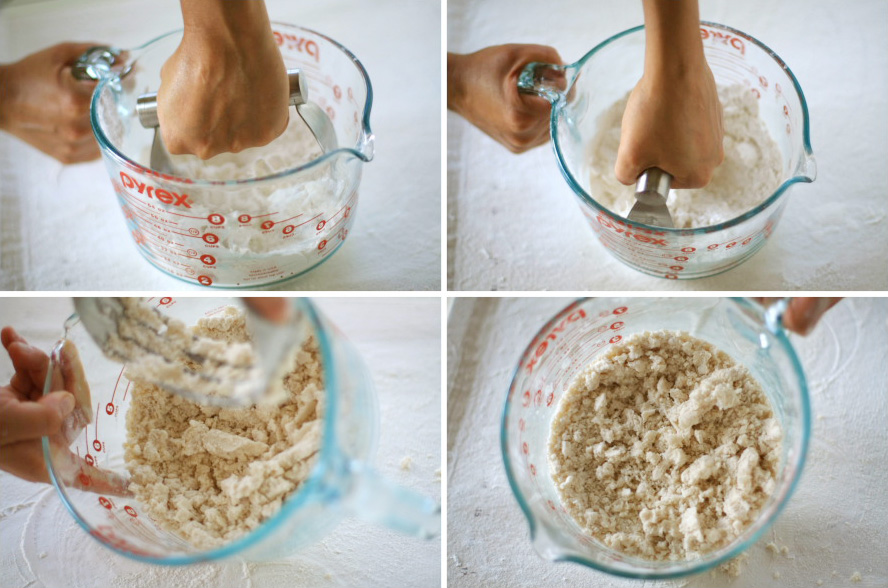
The motion with the cutter is down and twist your wrist one quarter turn, Daniel-san. Down and twist. Continue this motion until the flour has been worked into the lard and your dough resembles small peas. Don’t overwork the dough at this point.
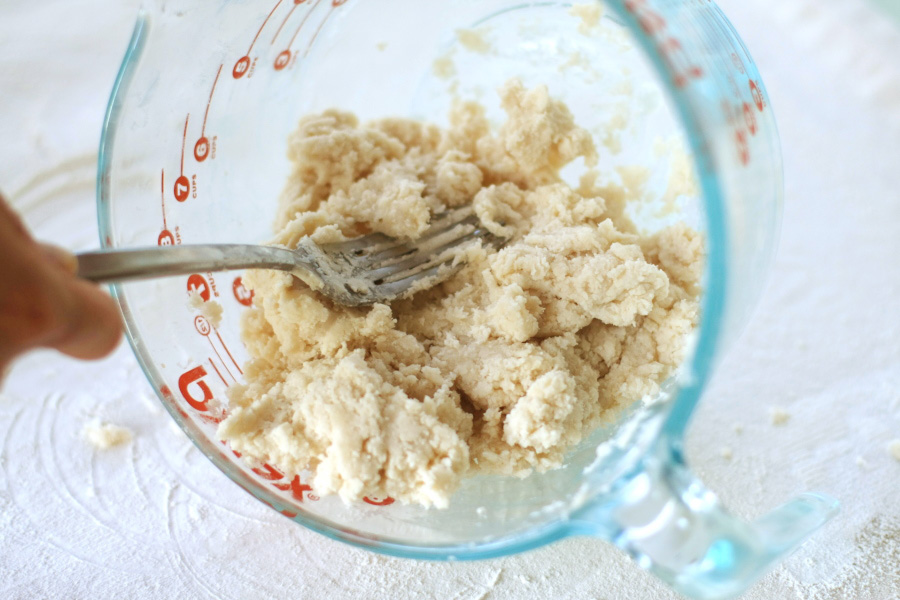
Next add liquid. My mom uses very cold milk. Grandma Eva used ice water. Both work equally well. Start by adding about half the liquid, which for my mom’s crust recipe is 2 tablespoons. Then slowly add one to two tablespoons more, using a fork until the dough pulls together into a ball. Stop before the dough gets too wet but is nicely pulled together.
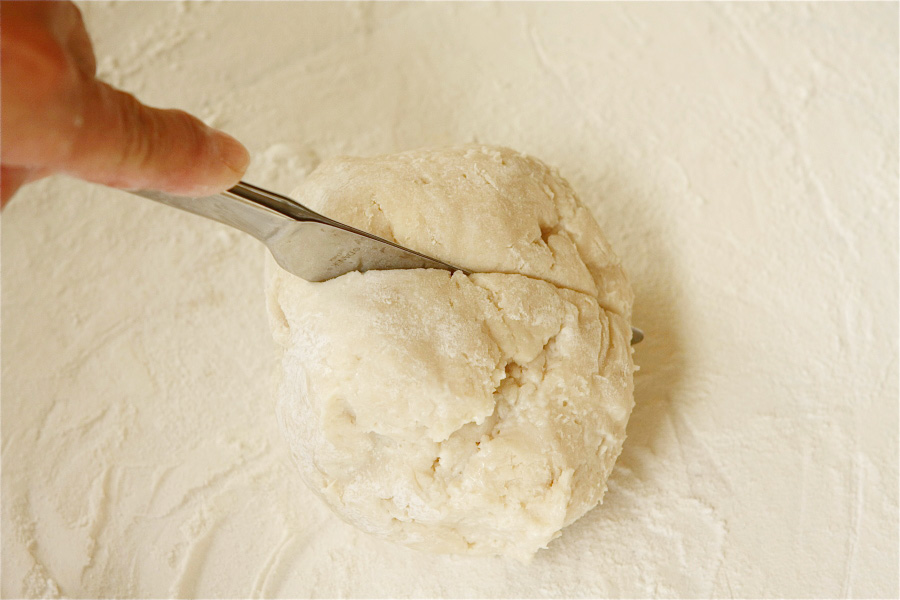
Cut your ball in half and lightly work into two disks. Wrap them individually in plastic wrap and put in the refrigerator for half an hour or up to a day.
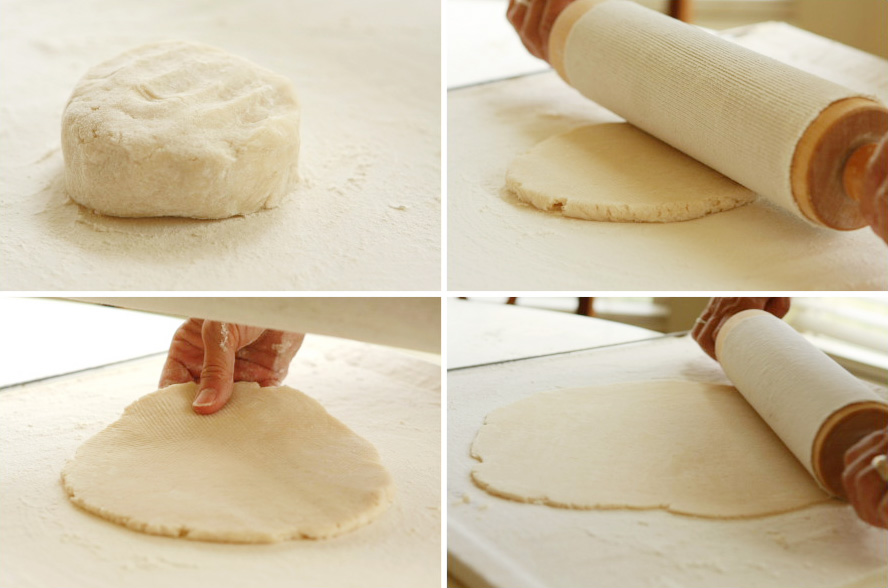
Remove one ball from the refrigerator at a time and turn onto your nicely floured work surface. Don’t be shy about the flour if you are rolling out on a counter or cutting board. It’s not fun to have your dough stick. This is why I love my pastry frame—the dough never sticks, even with a moderate amount of flour.
Work the dough with your rolling pin, applying gentle pressure. Roll away from you, then turn the dough a half turn and roll away from you again. As you turn the dough, make sure to add more flour underneath as needed.
Continue this until your dough is too large to turn. Roll until your dough is about a 12″ circle for a 9-inch pie plate and about 1/8 inch thick.
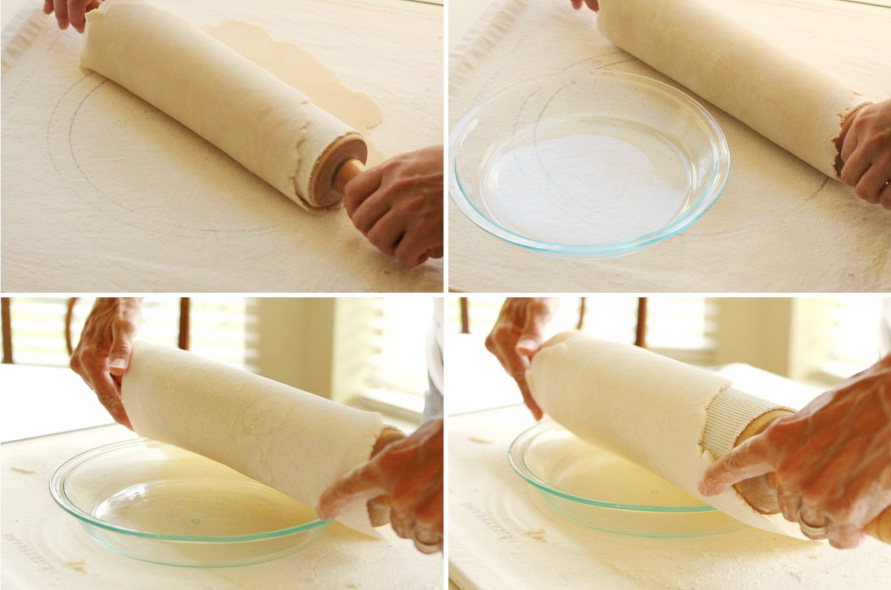
Many pie makers will tell you to fold your dough in quarters then gently lift it into your plate. Our method is much simpler and works like a charm. Gently roll the dough over the top of your rolling pin, slip the plate under, center and roll the dough into the plate.
When it comes to pie plates, my mom and I agree: a simple style glass Pyrex is best. It does a wonderful job of evenly cooking your pie crust. We even prefer Pyrex over more expensive ceramic plates.
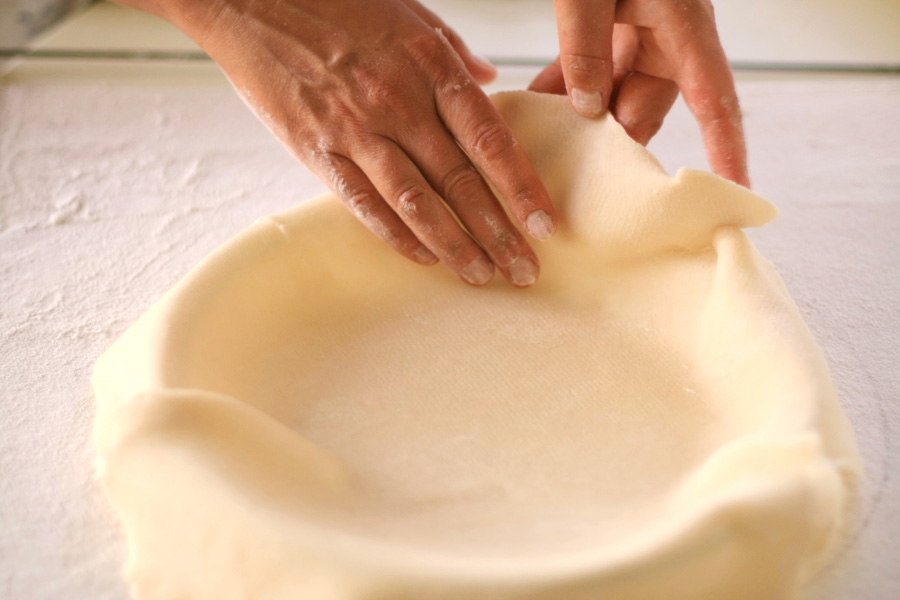
The next step is important. Working around the pie, lift the edges of the dough and make sure the dough is snugged into the corners of the pie plate without stretching the dough. This will keep your dough from slipping down when baking.
If you are making a double crust pie, roll out the top at this point. I like to cut my vents while my dough is still on the pastry frame and the surface is firm. That way I can use a cute little cookie cutter to cut a small shape in the center of the crust.
Fill the pie with your filling. Wet the edge of the dough in the plate with a little water. Roll the top over the rolling pin, carefully center it over the pie, and roll into place. Trim around the pie using kitchen scissors or a knife, leaving about a 1/2-inch overhang.
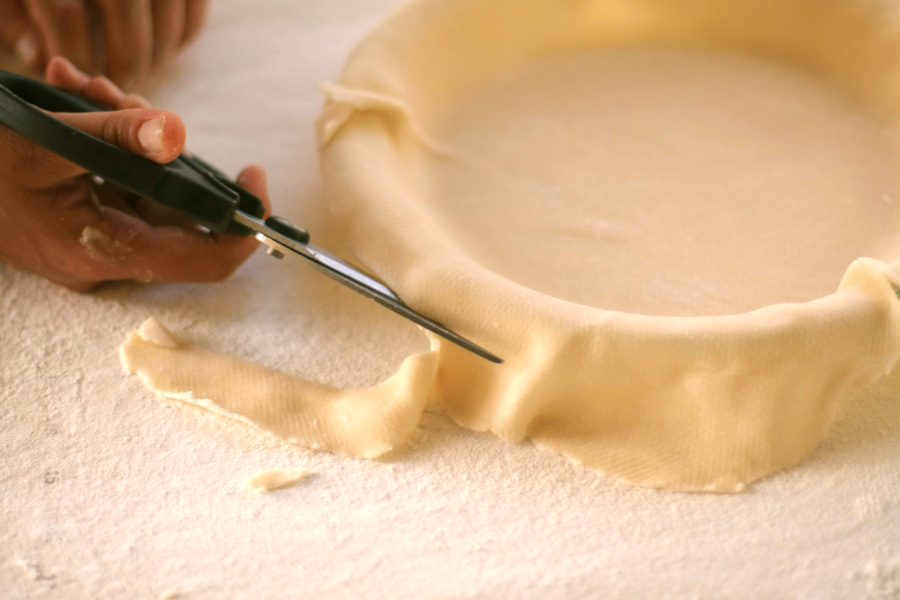
If you are making a single crust, trim around the pie, leaving about 1/2 inch overhang.
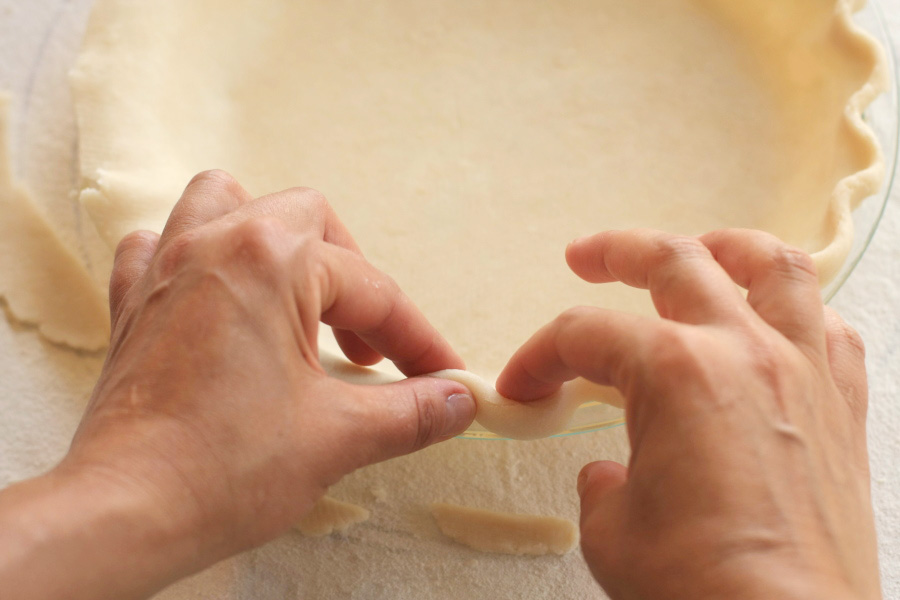
My mom and I both flute the edge of the pie by using a thumb and two index fingers, folding the edge, crimping and fluting as you go. Follow the same process for a double crust pie.
Finish your double crust pie by brushing the top with milk or egg wash and sprinkling the surface with sugar to make a lovely crisp sheen on your crust. If you didn’t before, make sure to cut vents for steam.
For a single crust pie where the filling needs to be baked in the pie, fill and bake according to your recipe. Trust me on this one: once you fill your pie, bake it immediately.
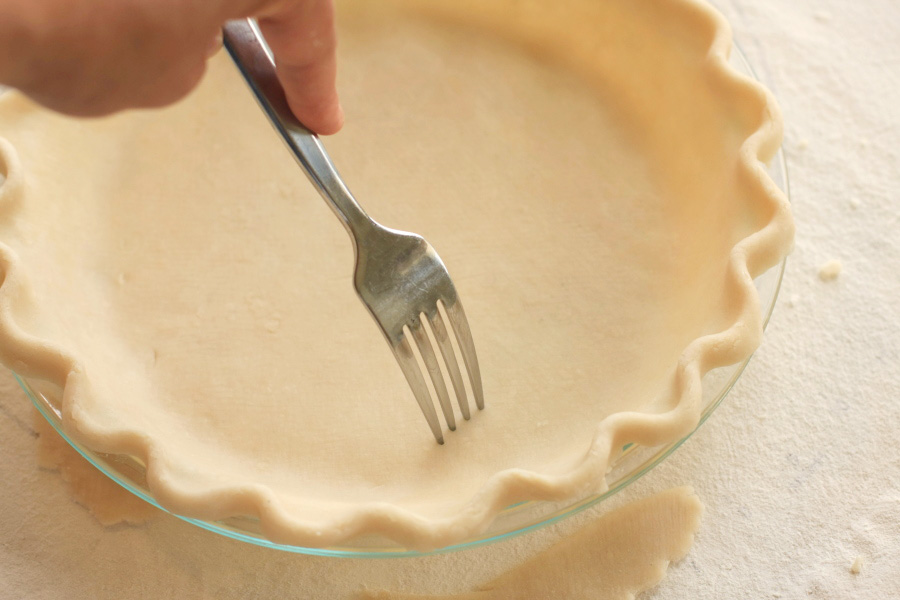
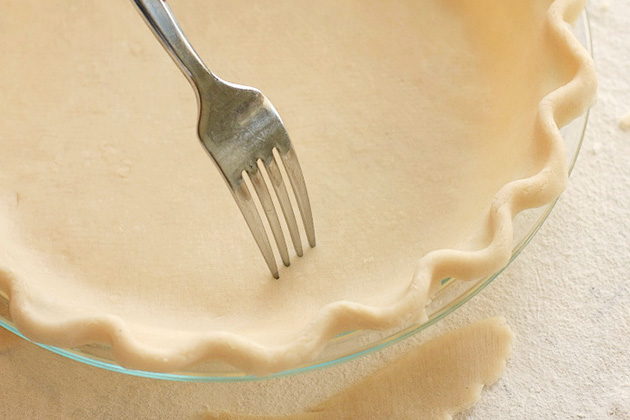
For a pie requiring a precooked crust, use a fork to pierce evenly around your pie crust. Bake in a 400ºF oven for about 15 minutes until your crust is golden brown.
You may wonder why I don’t mention pie weights. The need for them depends on your recipe. My mom and I have never had trouble with our crusts slipping into the pan, and have never needed or used weights. If you feel you need them, line your pie crust with parchment or foil and use dry beans or rice to fill the pie.
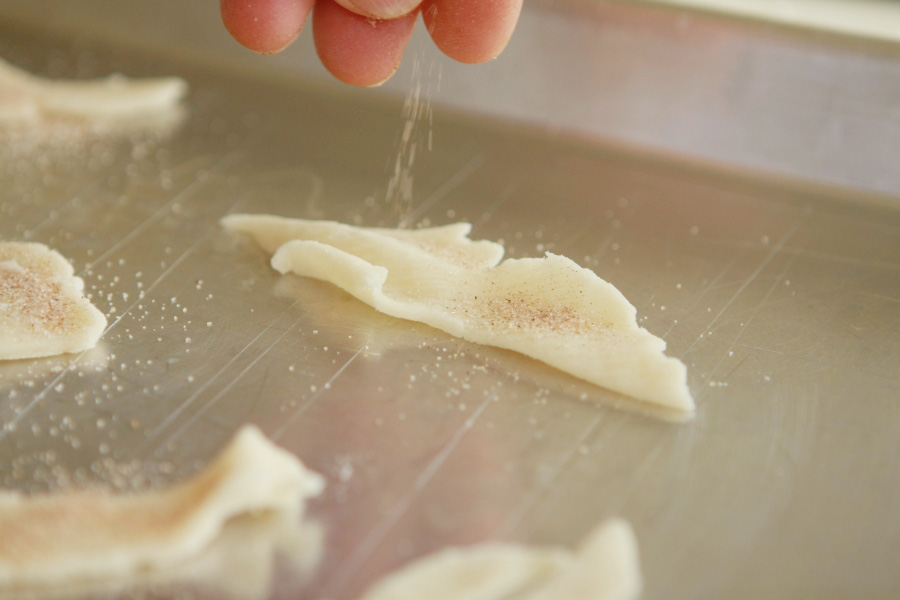
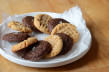
We never throw away our leftover pie scraps. Cinnamon pie scraps are a favorite treat. Place your scraps on a cookie sheet cut in bite-sized pieces. Sprinkle with cinnamon sugar and cook at 400ºF for 8 to 10 minutes or until golden brown.
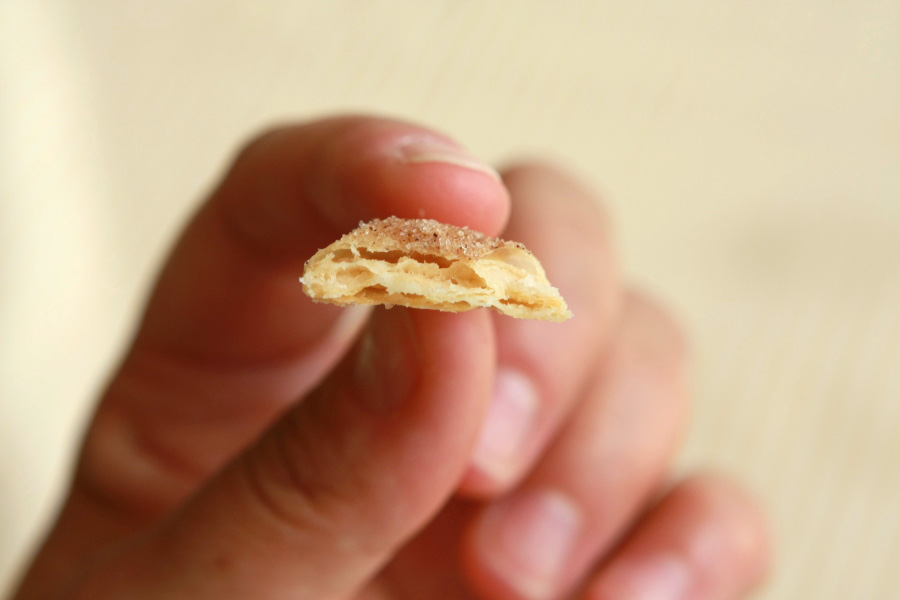
Just look at that crust, so light and flaky.
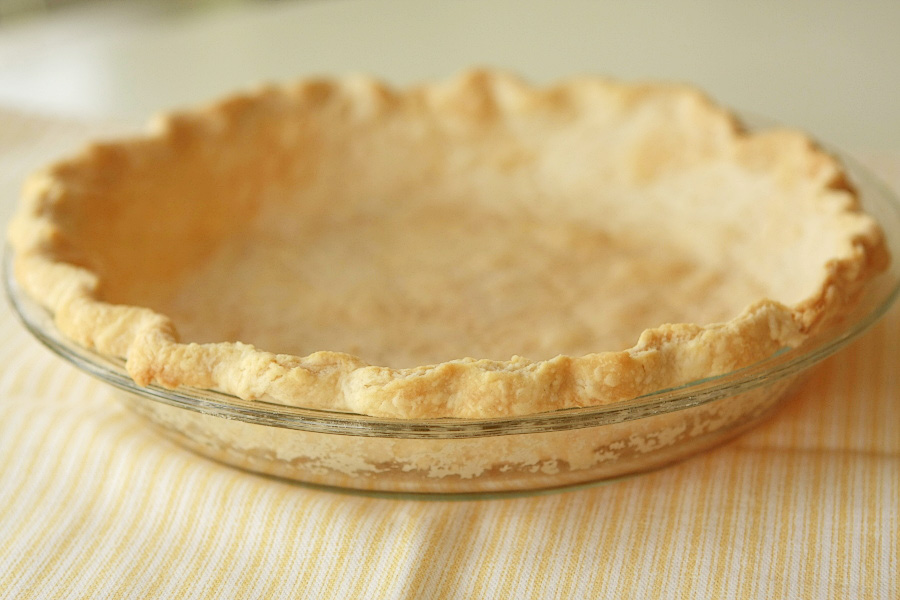
The pre-baked pie crust can be made several days ahead until it is ready to be filled with coconut or banana cream …
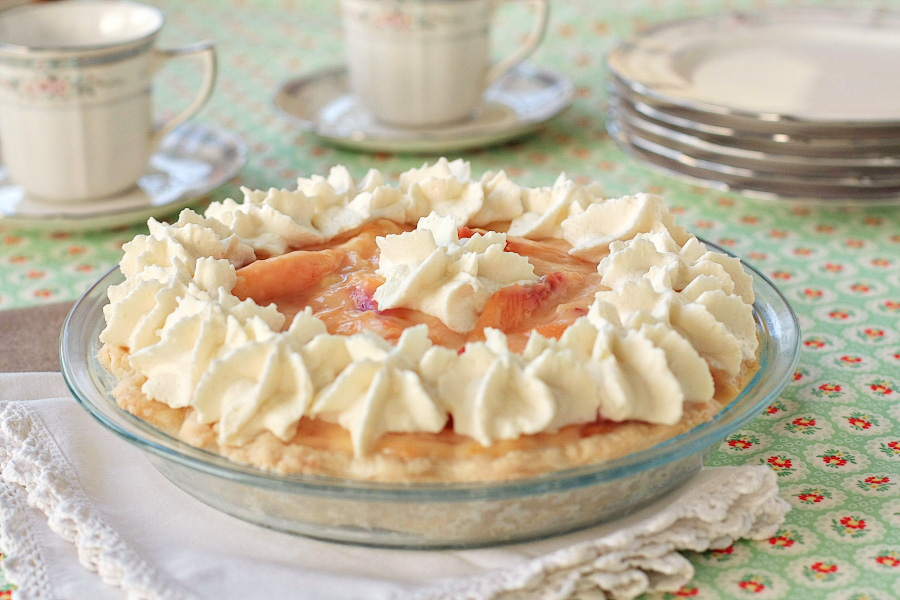
Or one of my favorites: fresh peaches. That’s the pie we made today. While peaches are in season, it’s a treat not to be missed.
The first few pie crusts I made tasted good but weren’t very pretty. I’ve even had a few epic failures, like the time I filled an apple pie and put it in the refrigerator overnight so I could cook it fresh on Thanksgiving morning. It came out of the oven gorgeous and golden. But when I served the pie, the bottom crust had turned to goo. So awful! I’ve lived and learned and gotten better with every crust. It’s a skill worth working at, and one your family and friends will love you for.
There are many ways to make a great pie crust, this is simply one method. But it’s a good one. It creates a flaky, tender, delicious pie crust every time. This tutorial is mostly about technique and could be applied to other recipes.
You can also find the printable recipe for my Mom’s Fresh Peach Pie here on Tasty Kitchen and a step by step tutorial on my blog. And thanks, Mom, for sharing your skill and wisdom.
Printable Recipe

Print Options
Description
This crust is simple, yet tender, flaky and delicious. It works for sweet or savory pie fillings. Makes 2 single or 1 double pie crust.
Ingredients
- ⅔ cups Cold Lard
- 2 cups Sifted All-Purpose Flour
- ½ teaspoons Salt
- 4 Tablespoons Cold Milk
Preparation Instructions
Measure lard and place in the freezer. Sift flour onto a piece of parchment or wax paper. Re-measure flour and sift again with salt into a mixing bowl. Using a pastry cutter, cut cold lard into the flour mixture until the dough resembles small peas. Do not overwork. Add 2 tablespoons milk and work into the dough using a fork. Add one or two more tablespoons of milk, working with a fork until the dough pulls together into a nice ball. Divide into two equal pieces and lightly work into disks. Wrap disks individually in plastic wrap and refrigerate for 1/2 hour or up to one day. On a floured work surface, roll out into a 12-inch disk about 1/8 inch thick and place into a pie plate.
Fill and bake according to your pie recipe. If a recipe calls for a pre-baked pie crust, pierce evenly around the crust with a fork and bake in a 400ºF oven for about 15 minutes or until golden brown. Makes one double crust or 2 single crusts.
_______________________________________
Calli is truly a woman of many talents, from cooking, sewing, crafts, beautiful photography and gardening. Her blog, Make it Do is a treasure trove of recipes, household tips, crafts projects, sewing patterns … you name it. It’s also peppered with photos of her beautiful kids. Go visit her site, and visit it often. There’s always something new to learn there!

52 Comments
Comments are closed for this recipe.
MPMommy on 11.19.2011
This is exactly how my Mom has always made pie crust and she learned from her Mom, who learned from her Mom, etc. The only difference is she uses shortening instead of lard and ice water to pull the dough together. She’s never used a food processor to make the dough and I’ve always been a bit miffed when every recipe I’ve ever read says to use one. As for the dough scraps, we used to either eat it raw, baked with cinnamon sugar, or if there was enough, we’d make little pocket tarts with some jelly inside.
Stacey on 11.1.2011
That was excellent, thanks
Reb on 8.15.2011
I have never baked a pie before, but after reading the tutorial and having awesome step by step instruction, makes me feel confident enough to try. Need to go William sonoma’s and get one of those handy dandy rolling pin sleeve and pastry frame……love that store!!!
VA on 8.15.2011
The rolling pin sleeve and pastry cloth are available as a set on Williams Sonoma site.
http://www.williams-sonoma.com/products/pastry-cloth-set/?pkey=cbkwpstdec
Linda on 8.15.2011
Exactly the way I’ve made pie crust for almost 60 years! And lard is by far the best. I didn’t look it up, but I think this is the recipe from my wedding gift Betty Crocker cookbook that is almost worn out.
Anna on 8.14.2011
Why have I never eaten pie scraps and seem to be alone in this? This needs to be remedied asap. Wonderful tutorial, thank you – I can never seem to crimp edges remotely that well, you make it look so easy
Karen C on 8.14.2011
I’ve never heard of a pie frame. Where could I purchase one? I have a tupperware mat for rolling out pie crust that has the size pie crusts marked on it and also some cup and spoon measurements on it.
Thank you
Karen C
Marilyn Hausknecht on 8.14.2011
So fun to see Winder Dairy milk as one of the star ingredients.
A Utah neighbor.
Shayne on 8.14.2011
Okay, so this is my story. My wife was off on vacation, I couldn’t go this time just too many things to do and catch up on. But some friends were dropping over from out of town and they particularly like my wife’s pies, especially the crust. To say they were disappointed she would not be home to bake her pie is an understatement, but they rarely get by this way so they were still planning on dropping in to see me.
I thought I’d surprise them and pull out my wife’s recipes and bake them a pie which I figured might be a close reasonable facsimile. Couldn’t find her recipe book, and determined to find a recipe went online and came across yours.
Followed it to a T, and made my wife’s patented apple pie. Well, was that the biggest mistake I’ve ever made or what. The pie turned out fantastic, just great, better than my wife had made…the crust was to die for and our friends couldn’t stop raving about it. What a predicament I suddenly found myself in, I certainly couldn’t let my wife hear I had out-baked her. Needless to say I made arrangements with our friends to ensure my wife would never find about my pie baking episode. Thanks for a great recipe by the way.
CouponClippingCook on 8.13.2011
What a great tutorial. You make this look so simple but I’m sure it’s your magic touch that makes the pie crust so flaky and delicious. Love the pie crisp treats too. Super post!
becky up a hill on 8.13.2011
when i get home from vacation, me and that peach pie have a date. The last few years, I use buttermilk for my liquid. It gives the crust a depth of flavor that is so amazing and also the acid helps to keep it tender. Thanks for the wonderful tutorial.
Melinda on 8.13.2011
Thank you for the beautiful and helpful tutorial. I make good pie dough, if I say so myself. I think using a pastry cloth (hemmed square of canvas) is extremely helpful. It keeps dough from sticking, and makes cleanup much easier. I have two questions maybe someone can help with.
I have always been confused why my pie dough requires more water (like twice as much) as is called for in recipes in order for the dough to hold together. I don’t live in a dry climate, and it is the same winter and summer. Anybody else have this issue?
I do find it a challenge to make a pretty edge and I admire the writer’s beautiful edge. On occasion, when making a double crust pie, I cook the bottom separately, fill the pie, then cook the top. I cannot figure out how to solve the edge problem when I do that, because I have a cooked crust edge on bottom and raw dough layered on top. Any suggestions how to make a pretty edge in this situation?
Thanks again for the great tutorial.
Kari Tyree on 8.13.2011
I love making pies, but I have never thought of saving the extra pieces of dough and put cinnamon and sugar! I am going to do this from now on . What a simple but fantastic idea. Love-kari
Sandy on 8.13.2011
We put grated parmesan cheese on the scraps. Yummy too.
By the way, my ex-husband is a potter and he used to make pie crusts. Here’s a hint: you know how hard you have to work clay? Well … never eat pie crust made by a potter.
Jo Derouin on 8.13.2011
My Mom made her crust with lard. She had a recipe that used the whole pound of lard. This recipe makes enough crusts 4 double crust pies, freeze and use when needed.
We used up leftover piecrust by rolling out and spreading with sugar and cinnamon then rolling and slicing like mini cinnamon buns.
This brought made many many memories,pie was my Dad’s favorite dessert,we always had dessert.
callimakesdo on 8.12.2011
Hi Linda, My grocer has lard in the refrigerated meat section. It can also sometimes be found in the Mexican Food section.
Also I forgot to mention, the sleeve on my rolling pin comes with the pastry frame. It really helps so the dough doesn’t stick or absorb too much flour.
Melanie Broderick on 8.12.2011
I love making homemade pie’s. However, I boke my finger this summer and although the brace came off a week ago….I still can’t move my ring finger and my pinkie very well. So I have a question for all you homemade pie maker’s out there? What store bought pie would you buy….I know homemade is the best….but if you wanted… say a” peach pie”, what brand would you buy? Also if you were going to buy just a pie crust what brand would you buy?
Jacqui on 8.12.2011
Thank you SO much for doing this beautiful tutorial!! I am daunted by the idea of making pie crusts from scratch and so have often given up and just bought a pre-made crust. WIth your words of encouragement and this wonderful step-by-step tutorial I feel like, just maybe, I can do it!!
Diane in Dallas on 8.12.2011
My mother used to take the scraps and roll them out again. She would spread them with butter, sprinkle with cinnamon and sugar, and roll up. She would crimp the ends with the fork and then bake. She always had enough left over to make this especially for me. Maybe that is why her crusts never really quite fit the pie pan!
Linda R. on 8.12.2011
Where would I fing lard? I have never seen that in the grocery store. What aisle?
Claire in Az on 8.12.2011
So true that practice makes perfect.
I wasn’t very good at crusts until I offered to help the kindergarten class make individual apple pies for Thanksgiving one year. I learned so much by making that pie crust dough over and over again to produce 30 or so little pies. It was a revelation! My best hint learned from the experience is to let your dough rest for at least 30 min to overnight.
And you can freeze your extra discs of dough for later!
Faun on 8.12.2011
Calli, thanks for the great directions and tips for pie crusts. I’ve been married 33 years and just this past holiday season I attempted a few pies with homemade crusts. They weren’t too bad, but I’m hoping to make them better!
Jay on 8.12.2011
The pie scraps sprinked with cinnamon and rolled often known as ” pets de soeur” in this area. That translates as nun’s farts! Other more devout, or perhaps non – Catholic, families call them puppy dog tails.
Cathleen Mayer on 8.12.2011
My Mother’s chocolate cream pie was the best! She passed away in 2008 and among the many things our family misses about her are her pies! They were wonderful and I don’t even have the courage to attempt them.
callimakesdo on 8.12.2011
Hi Patty that is my handy dandy rolling pin sleeve. I use it in conjunction with my pastry frame. The rolling pin cover–rather than the pastry–absorbs excess flour, giving you a tender, flaky pie crust.
maryfrancesellison on 8.12.2011
My sister, Patti, is the one who is known in our family for her pies (my husband and son always want to know if “Aunt Patti” is bringing a pie or two to our family gatherings) – but with this tutorial I may be able to give her a run for her money. I’ve always been intimidated by making the pie crust and have always opted out for frozen, pre-fab pie crusts … but no more! Now I know the secrets and will follow the instructions to the letter. Thanks, Callie!
And thanks for the note at the beginning about A Pie for Mikey – thanks for the reminder that live is short, so it’s up to us to make it sweet.
Leslie on 8.12.2011
I have learned that the key to good pie crust is confidence. You have given so many cooks a dose of confidence with this tutorial. Just do it, keep at it, and follow your wonderful spot on instructions! Pie is the complete comfort food of my childhood and I can see my grandmother whipping up a crust with what seemed a few flicks of her hands. I will channel her and follow your words. Many Thanks!
mnheather on 8.12.2011
I confess that I have made pie crust before, JUST for the pie crackers (that’s what we’ve always called the cinnamon-sugar pieces).
lawyerlori on 8.12.2011
All I can say is WOW!!!
What great information! Thank you so much for sharing this step-by-step with us!
Gina on 8.12.2011
wonderful! i was wondering where you got your pastry frame… that looks like a great tool to have – my dough always sticks to the counter and i feel like i add too much flour to it to keep it from sticking
Erin on 8.12.2011
I just spent a good amount of time looking for a pie frame online but can’t seem to find one….. any tips on where to get one?
Patty on 8.12.2011
Looks great, what is around your rolling pin?
Cathy Shea on 8.12.2011
Wish there was a way to make the perfect gluten free & dairy free pie crust….sigh
DipDiva on 8.12.2011
What’s wrapped around your rolling pin? Is that a secret?? I’m always looking for tips.
Katie of Cabbage Ranch on 8.12.2011
Pie dough scraps have always been a favorite treat in our house, and we top them the same way! Thanks for the great tutorial. Maybe next time my whole pie won’t look like it shoulda been scraps.
Elsie on 8.12.2011
This is a great post for pie-making. Thanks for all the good tips here.
I tried all sorts of pie pastry recipes for years and couldn’t find one that worked consistently for me until I used the one from the backside of the label from Libby’s canned pumpkin. It’s a never-fail, sure thing for me now. I use plain Crisco and add a little more ice water than it calls for, but I have no problems making it. Good luck to all who try pie-making from scratch. Just remember that the key is practice, practice, practice. Keep the faith that you WILL prevail in time.
Mrs C on 8.12.2011
Oh my goodness! How did you know I need serious help when making a pie crust? This is just fabulous but I am so envious I am in Cali and cannot enter the weekend at The Lodge! What I would give to step inside the PW kitchen!! And just hang with Charlie!!! Happy weekend!
Nancy Klune on 8.12.2011
My grandmother used white vinegar instead of the salt. She believed it made a even more tender pie crust. It worked for me! LOL
Nancy Klune on 8.12.2011
My grandmother used white vinegar instead of salt. She believed it made the crust even more tender. All I know is she never made a tough pie crust.
Gayle Wilson on 8.12.2011
My first pies were all-lard crusts – we lived in China and the pork we bought was half fat. Hard to get good quality oil, so I learned how to make lard. And it made excellent pies. When we lived in NA again, I decided to try my mom’s recipe because it’s always good and she was never stressed. It was weird – it was forgiving, no tablespoons of icy cold water, no trying to get to pea-sized balls or whatever. Yet it wasn’t some cheater recipe that didn’t measure up to the regular lard crust. I’ve used it ever since to rave reviews:
1 tbsp butter
1/2 c shortening
1/3 c lard
1/2 tsp salt
1/8 tsp baking powder
Cream together
Add 2 cups flour and combine.
Add up to 1/2 cup milk (I’ve used non-fat with no problems – tada, it’s a diet food!)
Then treat as normal dough (divide into two balls, roll out, put in pie dish, crimp/poke, etc.). Depending on climate, may need a little more flour.
Patrice on 8.12.2011
Oh my gosh, cinnamon sugar pie scraps! I just went back to my childhood when Mama and I would bake pies. Or she would bake and I’d “help” by eating pie scraps! lol Good times. XOHFSXO Thanks for the great instructions!
Diane Ingledue on 8.12.2011
That is the most beautiful pie crust i have ever seen!!!!!!!!!
Travis Cotton on 8.12.2011
That crust looks awesome! Im not an accomplished baker but Ive been doing more baking lately trying to round out my kitchen expertise.
Stace on 8.12.2011
I’m known for my pies but I’m always looking to learn more. This tutorial was perfect! I often give a pie making kit for bridal showers. Kit: pie plate (Pyrex of course), pastry blender, and mixing bowl and sometimes I include a home-made rolling pin (my favorite an 18 inch long two and a half inch diameter dowel) along with a hand printed recipe for crust. I will now include a link to this wonderful article! Thank you so much.
TiffH on 8.12.2011
Similar to my mom’s recipe, but we use ice water, and crisco. Yea for pie!
Celia on 8.12.2011
That is one of the most beautiful pie crusts I’ve seen! Thanks for the tutorial!
Cheryl Bishop on 8.12.2011
I love your table cloth.
Christina on 8.12.2011
Thank you!
My husband also thanks you
He loves pie.
xoxo
Katrina on 8.12.2011
This tutorial is perfect! Thanks so much for going through the trouble!
Heather (Heather's Dish) on 8.12.2011
aw, we used to do the cinnamon sugar crisps with the extra dough! probably my favorite part about making pie dough honestly. i’m saving this step-by-step for the holidays!